Onboard Compute & AI Chips
Onboard compute and AI accelerator modules are the "brain" hardware bolted into a humanoid robot's torso or head, running perception, sensor fusion, and increasingly vision-language-action foundation models locally so the robot can see, reason, and move without a cloud round-trip. This category covers the SoCs, GPU/NPU modules, and custom silicon that robotics companies either buy from merchant chipmakers or, in a few cases, design in-house.
Manufacturers
6 companies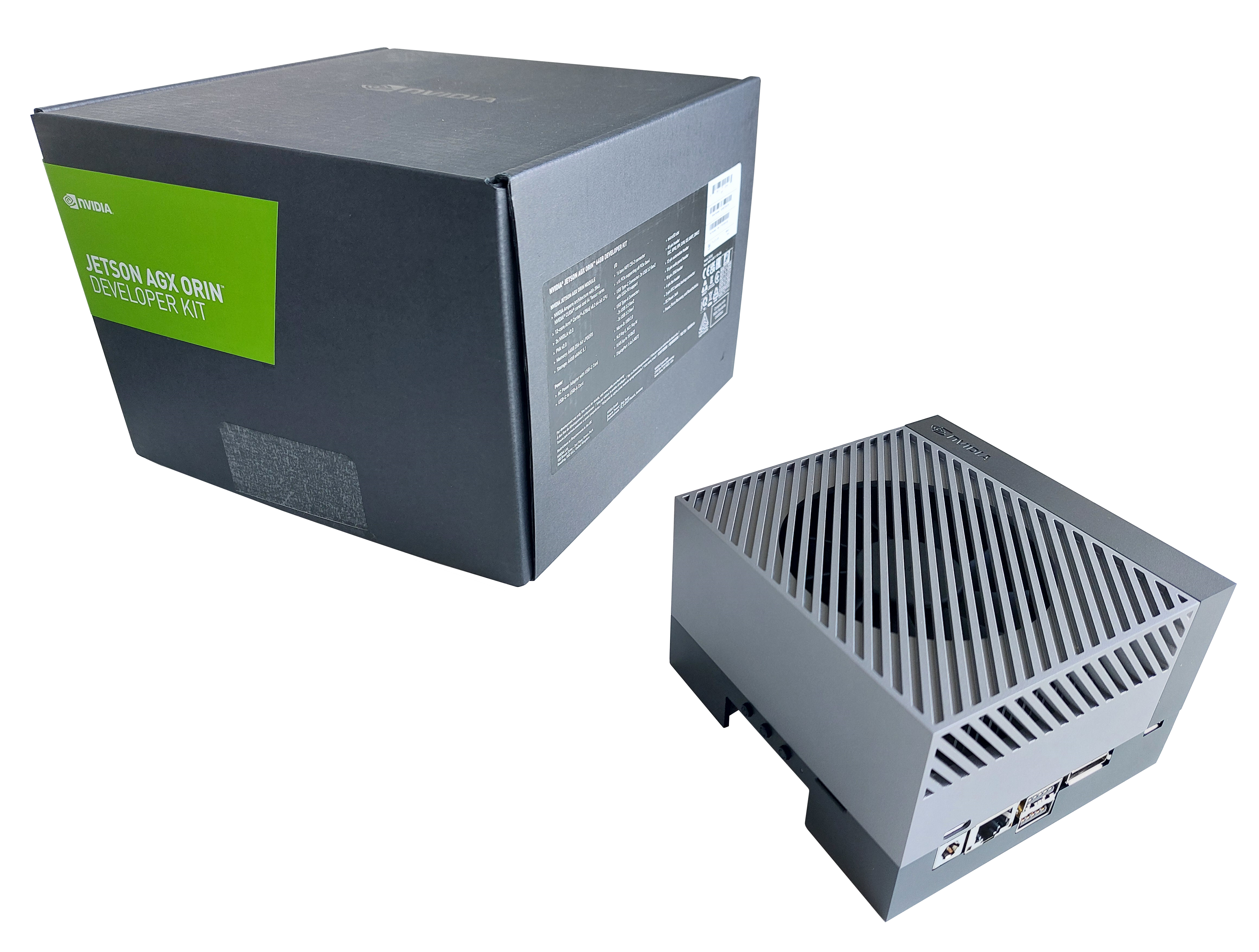
NVIDIA designs the Jetson family of embedded compute modules — GPU-accelerated system-on-modules purpose-built for robotics and edge AI. Its newest module, Jetson AGX Thor, built on the Blackwell GPU architecture, is explicitly marketed as onboard compute for humanoid robots and is being adopted as production hardware by multiple humanoid programs. Earlier Jetson Orin modules are already deployed onboard robots such as Figure's and Unitree's humanoids.
Qualcomm builds the Dragonwing (formerly Robotics RB5) line of heterogeneous CPU/GPU/NPU processors aimed at drones, AMRs, and humanoid robots, combining 5G/Wi-Fi connectivity with dedicated AI inference engines. In 2026 it introduced the Dragonwing IQ10 series and a full robotics reference design targeting full-size humanoids, and has announced collaborations with Figure and NEURA Robotics to co-develop humanoid compute architectures.

Tesla designs its own onboard compute silicon in-house rather than buying merchant chips. Its AI4 (Hardware 4 / FSD Computer) processor, originally built to run Full Self-Driving in Tesla vehicles, is adapted to serve as the onboard "brain" for the Optimus humanoid robot, processing camera input and running end-to-end neural networks that generate motor commands. Tesla has said its next-generation AI5 chip will be focused specifically on Optimus and its compute clusters.

Rockchip is a Chinese fabless semiconductor company (Shanghai Stock Exchange: 603893) that designs ARM-based system-on-chip processors for IoT, single-board computers, and increasingly robotics. Its RK3588/RK3588S flagship SoC — an octa-core ARM chip with an integrated NPU — has been adopted as onboard compute in several Chinese humanoid robot platforms, including AgiBot/Zhiyuan's Lingxi X2, LimX Dynamics' Oli, and Galbot's Pi models.
Intel is expanding from PC and data-center processors into embedded robotics compute through its Core Ultra (Panther Lake) chips and Robotics AI Suite software stack, pitched as an alternative to GPU-centric platforms for humanoid and industrial robot brains. Intel has named Fourier and the humanoid robot RoBee (shown at CES 2026 running on Intel Core Ultra Series 3 edge processors) as ecosystem partners, and formalized an Intel Robotics business unit in 2026.
Hailo is an Israeli fabless chipmaker, founded in 2017, that designs dedicated edge AI accelerator chips distinguished by an architecture that keeps model weights on-die for high inference efficiency at low power. Its Hailo-8 and newer Hailo-10H (generative-AI-capable) accelerators are used as add-on inference modules in vision-heavy robotics and autonomous-machine applications, complementing a host CPU/GPU rather than replacing it as the primary onboard computer.