Vision & Perception Sensors
Vision and perception sensors — RGB and depth cameras, 3D LiDAR, and inertial measurement units — give humanoid robots the spatial awareness needed for navigation, obstacle avoidance, SLAM mapping, and precise manipulation. These components are typically sourced from specialized camera/LiDAR makers and MEMS-sensor semiconductor companies rather than built fully in-house, and are fused together (often alongside onboard AI compute) to let a humanoid perceive, balance, and safely move through unstructured human environments.
Manufacturers
6 companies
RealSense (formerly Intel RealSense) designs stereo depth cameras and vision-processing SoCs used for 3D perception, obstacle avoidance and manipulation in robots. It completed a spin-out from Intel in July 2025, raising $50M from Intel Capital and MediaTek Innovation Fund to focus on robotics and biometrics. The company states its depth cameras are embedded in roughly 60% of the world's AMRs and humanoid robots, and its D435i module ships on the Unitree G1 humanoid; RealSense also has a strategic collaboration with NVIDIA (Jetson Thor, Isaac, Holoscan) targeting humanoid perception workloads.
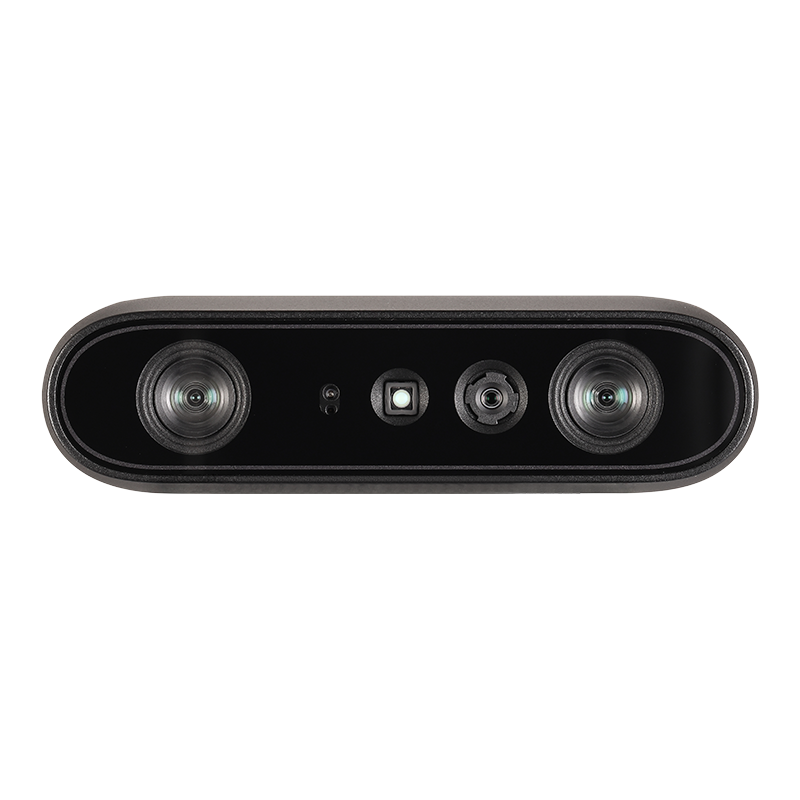
Orbbec designs and manufactures 3D/depth vision cameras spanning structured-light, iToF, dToF, binocular-stereo and LiDAR technologies for robotics, AI and industrial vision, and has been listed on China's STAR Market since 2022 as the country's first publicly traded 3D-vision company. Orbbec has a documented partnership with Unitree Robotics that integrates its stereo vision cameras into Unitree's humanoid and quadruped platforms to improve object recognition and grasping. Its Gemini 330 series stereo cameras use a proprietary depth ASIC (MX6800) for robust indoor/outdoor depth sensing.

Livox designs solid-state and hybrid solid-state 3D LiDAR sensors; the company was incubated inside DJI's Open Innovation Program in 2016 and now operates as an independent LiDAR maker. Its compact Mid-360 unit is integrated into the head of the Unitree G1 humanoid robot (and the H1), providing a 360-degree horizontal field of view for SLAM, obstacle avoidance and autonomous navigation.
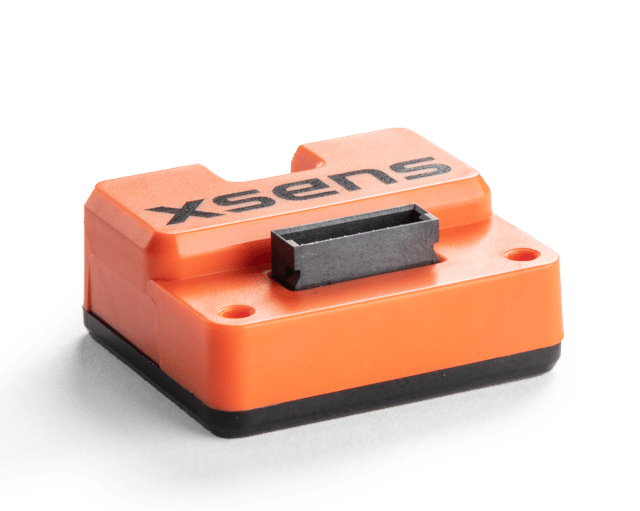
Xsens (which operated under the Movella brand from 2021 until reverting to the Xsens name in 2026) makes MEMS-based IMU, AHRS and GNSS/INS sensor modules plus inertial motion-capture systems used for orientation sensing, balance control and human-motion data capture. Its OEM IMU modules, such as the MTi-600 series, are marketed specifically for humanoid robot balance and push-recovery control at up to 400 Hz orientation output, and its camera-free inertial mocap suits are used by humanoid robotics teams to capture human motion data for imitation-learning training pipelines.
Analog Devices (ADI) is a major semiconductor manufacturer whose ADIS precision MEMS IMU family (triaxial gyroscopes and accelerometers, some with integrated magnetometers) is widely used for orientation sensing, localization and stabilization in mobile and legged robots. No specific named humanoid program has publicly confirmed ADI as its IMU supplier, but ADI is one of the most established IMU chip vendors used across the robotics industry generally.
Luxonis builds OAK (OpenCV AI Kit) embedded stereo depth cameras that pair dual global-shutter image sensors with on-device neural-network inferencing, controlled through its open-source DepthAI software stack, for robotics and industrial vision. Founded in 2018, its OAK-D camera line launched via a widely funded Kickstarter and is now shipped as a standard sensor package on Clearpath Robotics' mobile robot lineup. No specific named humanoid program has publicly confirmed use of Luxonis cameras, but the OAK-D family is a well-established general-purpose robotics AI vision camera.